Showing posts with label American writers. Show all posts

Sunday, October 21, 2007

Great classics: The Turn of the Screw


The Turn of the Screw (1898) is a novella by Henry James.

Tuesday, September 11, 2007

Modern Classics: Herzog


Herzog (1964) is a novel by Saul Bellow.

Monday, August 27, 2007

Great classics: The Aspern Papers


The Aspern Papers (1907) is a novella by Henry James.

Wednesday, August 22, 2007

Great classics: The Portrait of a Lady


The Portrait of a Lady (1881) is a great novel by Henry James. Isabel Archer is a woman in her early twenties who comes from a genteel family in Albany, New York, in the late 1860s. Her mother died when she was a young girl, and her father raised her in a haphazard manner, allowing her to educate herself and encouraging her independence. As a result, the adult Isabel is widely read, imaginative, confident in her own mind, and slightly narcissistic; she has the reputation in Albany for being a formidable intellect, and as a result she often seems intimidating to men. She has had few suitors, but one of them is Caspar Goodwood, the powerful, charismatic son of a wealthy Boston mill owner. Isabel is drawn to Caspar, but her commitment to her independence makes her fear him as well, for she feels that to marry him would be to sacrifice her freedom.
Shortly after Isabel's father dies, she receives a visit from her indomitable aunt, Mrs. Touchett, an American who lives in Europe. Mrs. Touchett offers to take Isabel on a trip to Europe, and Isabel eagerly agrees, telling Caspar that she cannot tell him whether she wishes to marry him until she has had at least a year to travel in Europe with her aunt. Isabel and Mrs. Touchett leave for England, where Mrs. Touchett's estranged husband is a powerful banker. Isabel makes a strong impression on everyone at Mr. Touchett's county manor of Gardencourt: her cousin Ralph, slowly dying of a lung disorder, becomes deeply devoted to her, and the Touchetts' aristocratic neighbor Lord Warburton falls in love with her. Warburton proposes, but Isabel declines; though she fears that she is passing up a great social opportunity by not marrying Warburton, she still believes that marriage would damage her treasured independence. As a result, she pledges to accomplish something wonderful with her life, something that will justify her decision to reject Warburton.
Isabel's friend Henrietta Stackpole, an American journalist, believes that Europe is changing Isabel, slowly eroding her American values and replacing them with romantic idealism. Henrietta comes to Gardencourt and secretly arranges for Caspar Goodwood to meet Isabel in London. Goodwood again presses Isabel to marry him; this time, she tells him she needs at least two years before she can answer him, and she promises him nothing. She is thrilled to have exercised her independence so forcefully. Mr. Touchett's health declines, and Ralph convinces him that when he dies, he should leave half his wealth to Isabel: this will protect her independence and ensure that she will never have to marry for money. Mr. Touchett agrees shortly before he dies. Isabel is left with a large fortune for the first time in her life. Her inheritance piques the interest of Madame Merle, Mrs. Touchett's polished, elegant friend; Madame Merle begins to lavish attention on Isabel, and the two women become close friends.
Isabel travels to Florence with Mrs. Touchett and Madame Merle; Merle introduces Isabel to a man named Gilbert Osmond, a man of no social standing or wealth, but whom Merle describes as one of the finest gentlemen in Europe, wholly devoted to art and aesthetics. Osmond's daughter Pansy is being brought up in a convent; his wife is dead. In secret, Osmond and Merle have a mysterious relationship; Merle is attempting to manipulate Isabel into marrying Osmond so that he will have access to her fortune. Osmond is pleased to marry Isabel, not only for her money, but also because she makes a fine addition to his collection of art objects.
Everyone in Isabel's world disapproves of Osmond, especially Ralph, but Isabel chooses to marry him anyway. She has a child the year after they are married, but the boy dies six months after he is born. Three years into their marriage, Isabel and Osmond have come to despise one another; they live with Pansy in a palazzo in Rome, where Osmond treats Isabel as barely a member of the family: to him, she is a social hostess and a source of wealth, and he is annoyed by her independence and her insistence on having her own opinions. Isabel chafes against Osmond's arrogance, his selfishness, and his sinister desire to crush her individuality, but she does not consider leaving him. For all her commitment to her independence, Isabel is also committed to her social duty, and when she married Osmond, she did so with the intention of transforming herself into a good wife.
A young American art collector who lives in Paris, Edward Rosier, comes to Rome and falls in love with Pansy; Pansy returns his feelings. But Osmond is insistent that Pansy should marry a nobleman, and he says that Rosier is neither rich nor highborn enough. Matters grow complicated when Lord Warburton arrives on the scene and begins to court Pansy. Warburton is still in love with Isabel and wants to marry Pansy solely to get closer to her. But Osmond desperately wants to see Pansy married to Warburton. Isabel is torn about whether to fulfill her duty to her husband and help him arrange the match between Warburton and Pansy, or to fulfill the impulse of her conscience and discourage Warburton, while helping Pansy find a way to marry Rosier.
At a ball one night, Isabel shows Warburton the dejected-looking Rosier and explains that this is the man who is in love with Pansy. Guiltily, Warburton admits that he is not in love with Pansy; he quietly arranges to leave Rome. Osmond is furious with Isabel, convinced that she is plotting intentionally to humiliate him. Madame Merle is also furious with her, confronting her with shocking impropriety and demanding brazenly to know what she did to Warburton. Isabel has realized that there is something mysterious about Madame Merle's relationship with her husband; now, she suddenly realizes that Merle is his lover.
At this time, Ralph is rapidly deteriorating, and Isabel receives word that he is dying. She longs to travel to England to be with him, but Osmond forbids it. Now Isabel must struggle to decide whether to obey his command and remain true to her marriage vows or to disregard him and hurry to her cousin's bedside. Encouraging her to go, Osmond's sister, the Countess Gemini, tells her that there is still more to Merle and Osmond's relationship. Merle is Pansy's mother; Pansy was born out of wedlock. Osmond's wife died at about the same time, so Merle and Osmond spread the story that she died in childbirth. Pansy was placed in a convent to be raised, and she does not know that Merle is her real mother. Isabel is shocked and disgusted by her husband's atrocious behavior—she even feels sorry for Merle for falling under his spell—so she decides to follow her heart and travel to England.
After Ralph's death, Isabel struggles to decide whether to return to her husband or not. She promised Pansy that she would return to Rome, and her commitment to social propriety impels her to go back and honor her marriage. But her independent spirit urges her to flee from Osmond and find happiness elsewhere. Caspar Goodwood appears at the funeral, and afterwards, he asks Isabel to run away with him and forget about her husband. The next day, unable to find her, Goodwood asks Henrietta where she has gone. Henrietta quietly tells him that Isabel has returned to Rome, unable to break away from her marriage to Gilbert Osmond.

©2006 SparkNotes LLC, All Rights Reserved.

Saturday, June 30, 2007

Contemporary Reads: Portnoy's Complaint


Portnoy's Complaint (1697) is a novel by Philip Roth. It is largely a rather candid sex-ridden monologue by Alexandre Portnoy. His Jewish upbringing in 1940s New Jersey, his highschool years and his failed relationships with shikses including The Monkey (a Southern illiterate girl called Mary Jane) are all part of the narrative. The climax is Portnoy's visit to Israel where he becomes impotent. Sex features abundantly and explictly. This novel is both funny and poignant.

Saturday, June 02, 2007

Contemporary Reads: The Road


The Road (2006) is a superb novel by Cormac McCarthy. After some unnamed cataclysm, a man and his son walk on the road trying to stay alive. The world is a desolate, dusty and ashen place, gray and rainy.

This is a very sad, brilliantly written and ultimately hopeful book.

Thursday, May 31, 2007

Contemporary Reads: The Emperor's Children


The Emperor's Children (2006) is Claire Messud's latest novel. It is a wonderful comedy of manners set largely in New York city in the months leading up to 9/11 . The book has been hailed by critics from both sides of the Atlantic. To read the review published on the New York Times click here.

Saturday, May 12, 2007

Contemporary Reads: Digging to America


Digging to America
(2006) is the latest novel by American writer Anne Tyler. You can read many reviews on this novel by clicking here.

Thursday, May 10, 2007

Modern Classics: In Cold Blood


In Cold Blood (1966) by Truman Capote is the masterful reconstrunction of a horrid mass murder that took place in Kansas in late 1959 when ex-convicts Perry Smith and Dick Hickock killed a whole family in their rural home.

Capote offeres us a study in depth of the crime, its effect on all those involved up to the criminals' execution. Exceptional.

Saturday, April 07, 2007

Contemporary Reads: Everyman

Everyman (2006) is the latest novel by Philip Roth. It is a book about death and physical decay or illness but it is not really sombre or pessimistic. What I admire about this book is the fact that this meditation on death does not resort to religion or philosophy. I am also completely puzzled as to how Roth has made it worked so well.
This is a great novel and I look forward to reading earlier works by this author.

Thursday, March 29, 2007

Modern Classics: Seize the Day


Seize the Day (1956) is a novel by Saul Bellow charting a day in the life of 44 year old Tommy Wilhelm. Wilhelm lives at a New York City hotel with his elderly fater, Dr Adler, after having separated from his wife following an affair he had. He has also recentently been laid off his sales job. Another guest at the hotel, Dr Tamkin - who claims to be a psychologist and a poet - convinces Wilhelm to enter a joint stock market venture that would result in Wilhelm losing his money.
Although the novel is about 1 day we learn much of Wilhelm's past: He once tried to make it as a screen actor in 1930's Hollywood. His "scout" Maurice Venice turned out to be a pimp. We also learn much about Dr Adler's relationship with a son he does not or perhaps cannot understand. Dr Adler is a hard working Jewish professor. He is stern and at times difficult and refuses to help Wilhelm.
While looking for Dr Tamkin, Wilhelm goins into a chapel where a funeral is taking place. The novel ends with Wilhelm crying at the stranger's funeral.

Tuesday, March 13, 2007

Modern Classics: White Noise

This is the second or third time I have read White Noise (1984) by Don Delillo. It is a dark, tremendously funny, novel about the greatest human fear: death.

Part campus novel, part thriller, part family drama, this is the story of academic Jack Gladney and his fourth wife Babette and all their children. Jack is the man who introduced Hitler Studies to North America. Both Jack and Babette are afraid of death although they try to keep it from each other. Babette has been secretly exchanging sex for a new experimental drug with Willie Mink. The name of the drug is Dylar and its purpose is to combat the fear of death. Once Jack finds out, after the whole family suvives an "airborne toxic event", he shoots him.

I have tried with other works by Delillo like Underground and Cosmopolis but have not been able to finish either. White Noise, however, is one of the modern American novels I have enjoyed the most.


Saturday, March 03, 2007

Contemporary Reads: The Kite Runner

The Kite Runner is the first novel by Khaled Hosseini. I found the book interesting as I thought it explained quite well the contemporary history of one of the countries that has featured more prominently in the news since 9/11, Afghanistan.

One day, Afghan emigré to the USA Amir receives a phone call from his father's best friend, Rahim Khan, in Pakistan. This event prompts him to remember his childhood in Kabul, his fleeing to America via Pakistan after the Soviet invasion, his settling in America, his marriage to fellow Afghan Soraya, and the death of his father Baba. The most interesting part of his account is his relationship with his Hazara servant Hassan. Hassan and Amir were brought up together and were best friends. They are both motherless and raised by their fathers. Their friendship is nuanced by their different social class and ethnicity. Hassan grows up illiterate whereas Amir will eventually become a published author in the USA. The two "friends" are split after Hassan is raped by Hitler-admirer Assef while Amir witnesses hiding and does not intervened. Hassan and his father Ali leave the house in shame. Baba never does find out why.

Amir learns from Rahim Khan that Hassan was his half-brother and that he had left an orphan in Taliban-ruled Kabul. He rescues the child, Sohrab, from the twisted Assef who surely enough had ended up joining the Taliban. Amir adopts his nephew and with Soraya all three become a family in San Francisco.

Half way through the book we get a glimpse of the Afghan emigrant experience in the USA, which I found quite enjoyable too. However, what I most enjoyed about the novel are the first chapters that depict Amir's and Hassan's childhood in pre-Soviet and pre-Taliban Afghanistan.

I did not care much for the last chapters and the "not-without-by-nephew" saga which I found too much soap opera like for my taste.

Friday, November 10, 2006

Contemporary Reads: A Home at the End of the World

A Home at the End of the World is a novel by American writer Michael Cunningham.
It has four main characters/narrators: Bobby, who lost his oldest brother whom he worshipped when he was a lad and then his parents, and ended up living with his best friend's family as a teenager; Jonathan, Bobby's best friend; Alice, Jonathan's mum; and Clare, Jonathan's New York City extravagant roommate.
Every chapter is narrated in the first person by the character who gives the chapter its name. The novel is divided into 3 parts:
Part I describes both Bobby's and Jonathan's childhood and youth. It also gives us an insight into Alice's anodyne married life and motherhood in Cleveland. It contains the shocking moment of the death of Bobby's brother, Carlton, followed by the deaths of his mum and then his dad. In this first part Bobby and Jonathan's friendship develop and they have their first sexual experiences together.
Part II follows Jonathan's life in New York and introduces his flatmate, Clare. It also describes Jonathan's parents' retirement move to Arizona. About to be left alone in Cleveland, Bobby moves to New York with Jonathan and Clare. Soon, Clare will entice Bobby into bed with her and without never quite becoming an item they start their liaison. This will alienate Jonathan who will realise that he is in love with them both and will move out unannounced. He will reappear months later. Jonathan's dad dies on this part of the novel and it is Clare, Bobby and Jonathan's attendence to his funeral that would be the catalyst for their reunion. On their road trip back to New York, Clare annouces that she is pregnant and it is decided that the three of them will raise up the kid as a family. Clare buys a house in Woodstock and a derelict café, The Home Café, that Bobby and Jonathan will make theirs while she looks after baby Rebecca at home. The three of them finally form a family.
Part III sees the return of Jonathan's lover, Erich, who had appeared briefly on part II before Jonathan decided to dissapear. Erich is now very ill and starts spending his weekends at Woodstock with the rest of the family. Alice gives Ned's ashes to Jonathan. Clare decides to take her daughter and go away leaving the café and the house to Bobby and Jonathan. As Jonathan finally feels at home he decides to scatter Ned's ashes.
This is a very fine novel by a very fine writer. It has been adapted to film but please do not waste your time with it (I did). The movie version is a much lower product.
Other books I've read by the same author: The Hours

Monday, October 23, 2006

Contemporary Reads: The Hours

The Hours is a novel by America author Micheal Cunningham. The book picks up on Virginia Woolf's best-known novel Mrs Dalloway. It fictionalises a day in the life of the modernist writer when she starts writing Mrs Dalloway and intertwines this narrative with a day in the lives of two other women: Clarissa Vaughan who is organising a party for a dying friend in 1990s Manhattan and Laura Brown who is getting ready for her husband's birthday in 1940s Los Angeles.

Cunningham moves enfortlessly between the decades in this imaginative and exquisite novel. It is an absolutely must read for those familiar with Virgina Woolf's fiction. However, I am sure that it can be enjoyed even by those who are not.
The book has been made into a film starring Nicole Kidman, Julianne Moore and Meryl Streep. But despite the great cast I would still prefer the book and actually found the movie disappointing.

Thursday, September 21, 2006

Contemporary Reads: A Boy's Own Story

Edmund White's novel, A Boy's Own Story, is the account of a gay teenager growing up in America during the 1950s. This Bildungsroman holds that being homosexual is merely about whom we fall in love with. The protagonist/narrator wants above all to love and be loved by a man. And yet he wants to be heterosexual. Although, I grew up in the 1980s and 90s I can utterly sympathise with his struggle as am sure can any other gay readers.
Is this then a book to be solely enjoyed by homosexual readers? Nonsense, this book can be read by people who enjoy The Catcher in the Rye.

Saturday, August 19, 2006

Great Classics: Daisy Miller

Daisy Miller is a delightful novella by Henry James. Its protagonist is a flirtatious American girl in Europe who is courted by a savvy man called Winterbourne. This tragedy can be read back to back in one sitting but take your time reading it to best appreciate James's beautiful prose.
Tuesday, August 15, 2006

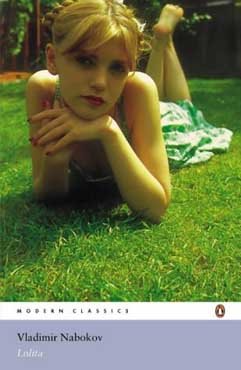
Modern Classics: Lolita

This wonderful novel by Russian author Vladimir Nabokov deals with the obsession Humbert Humbert develops for a 12 year old girl called Lolita. Apart from Nabokov's unique grasp on style - amazingly, English was his second languange - I was totally fascinated by the story.

The story is one of obsession and possession. HH possesses a young vulnerable lass. His obsession has no limits and will take the protagonist/narrator to transgressions beyond what is legally and morally acceptable in modern Western civilization.

This is a book that pushes many a boundary and one finds oneself enjoying the dark humour and the rich narrative style in spite of its troublesome subject matter. Lolita is a masterpiece and I thoroughly recommend it to everyone.